
AP LEADERS PROGRAM
Overview
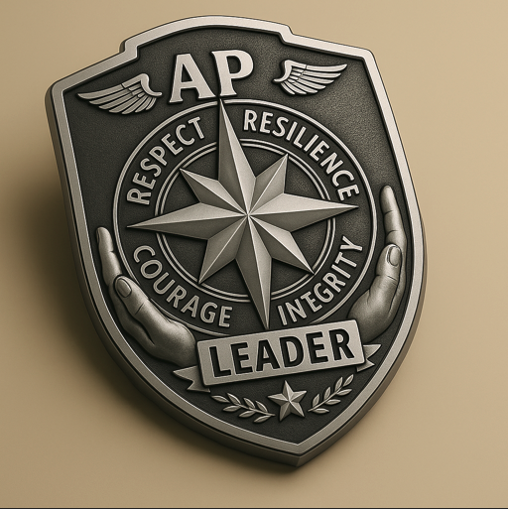
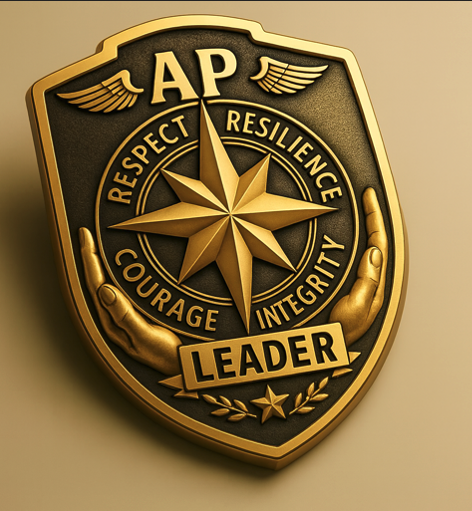
The AP Leaders Program is targeted at senior students in both primary (Grade 6 – silver badge) and secondary schools (Grades 11 and 12 – gold badge). This document is focused on Years 11 and 12, however, the primary school program will be an age-relevant version of the secondary school program.
Research confirms that peers are present in around 85% of conflict and bullying incidents, whereas teachers are present in less than 15%. Not every senior student can become a school captain, but they can all become AP Leaders, so it gives every senior student the opportunity to learn and implement leadership skills – and make a difference.
Senior students are, on average, the biggest, strongest, oldest and most influential students at the school, so, as bystanders, they’re a valuable resource. They can also have the most impact on the culture at school. To tap into this most valuable resource, we need to ask, from a senior student’s perspective, “What’s in it for me? Why should I do this?”
What Yr 11-12s actually want (and respond to)
Autonomy & status: real responsibility, a say in decisions, visible recognition.
Competence & mastery: practical skills that work (presenting, leading, conflict handling).
Purpose & impact: doing something that is measurable (a defined target), clearly helps younger students and leaves a legacy.
Belonging & connection: being part of a selective, admired team (social recognition matters).
Future advantage: improves resume, references, micro-credentials, and stories for scholarship/job/uni interviews.
Fair rewards: recognition and awards that are earned, not freebies.
What students get
AP Leaders Badges (35mm high with two butterfly clutches on back. These are provided free of charge by Bullyproof)
AP Leaders Code of Ethics (see draft below)
Induction Ceremony (can be done at any assembly). Teacher in charge of the AP Program presents badges and adds to the portal.
- Recognition and Awards: From a simple thank you, mentions at assembly, monthly awards, annual AP Leader awards, such as Bystander of the Year, AP Leader of the Year (each teacher at the school could vote on this), Courage Award, Respect Award, Resilience Award, Integrity Award, certificates (signed by Jeff Horn) to all AP Leaders on Awards Nights.
AP Leader Code of Ethics
Respect Everyone: I will treat all people with kindness, fairness and respect, recognising our differences as strengths.
Support Both Sides: I will support both the aggressor and the target, with understanding and compassion.
Stand Up Safely: I will intervene in bullying or conflict situations calmly and safely, seeking a win-win outcome at all times.
Work as a Team: I will support my fellow AP Leaders, knowing that together we can make a bigger difference.
Protect Wellbeing: I will always strive to ensure that “no one is physically or emotionally hurt” when I intervene in conflict or bullying situations.
Build Positive Culture: I will help to create an environment where every student and teacher feels safe, happy, respected, appreciated, and liked.
Lead by Example: I will act with courage and integrity, even when it’s hard.
How it works
The senior secondary level (Leadership Level – Grades 11 and 12) of the Amayda Program for 2026 has been reduced to five one-hour lessons to ensure it does not overly encroach on ATAR commitments. The five lessons are:
Lesson 1. Skills development
Lesson 2. Role plays using these skills both on their own and as part of a group to resolve a wide range conflict and bullying situations.
Lesson 3. Leadership
Lesson 4. The AP Leaders Program
Lesson 5. Self-worth and life after school
AP Leaders format
Objective of AP Leaders: Beat the Benchmark. The benchmark is the Culture Rating for the school, based on the weighted per incident per student per school day behaviour data (as below) for the three-year period prior to the launch of the Amayda Program at the school. Culture Rating weighting is as follows:
Behaviour incidents (Major) – 40% weighting
Suspensions (short and long) – 30% weighting
Exclusions – 10% weighting
Attendance Rate – 20% weighting
The AP Leaders objective is to beat this benchmark to show an overall improvement in school culture. Beating any of the four inputs is still a good result but the primary objective is to improve the overall Culture Rating by as much as possible. At the end of each term, the HOD in charge of the Amayda Program, can advise the AP Leaders of how they’re tracking. How much each cohort beats the benchmark by should be noted and recognised. For example, in 2026, the benchmark may be beaten by 5% and then in 2027, the next cohort set a PB (personal best), beating the benchmark by 7%, and so on. Of course, it may get harder to set a PB over time, but they should still be able to beat the benchmark, as this will have been established before the Amayda Program was launched. Of course, some very organised and motivated cohorts will achieve amazing results that may take many years to beat – but PBs are there to be beaten.
Different units to develop unique talents
The seniors can have a lot of fun with the AP Leaders Program, running it with military-style precision. We encourage leaders to use their creativity and leadership skills to make the biggest impact they can on the culture of their school, beating the benchmark by the biggest margin possible and leaving a lasting legacy at the school.
We suggest breaking the AP Leaders into teams, based on their individual talents and interests, however, this will evolve as the program develops. Suggestions for teams are as follows:
Operations: These are the strongest and most athletic leaders who can be deployed in hot spots around the school. They should pass on all situations they encounter to the Communications team.
Skills Development: These students (with good teaching or speech and drama skills) should run the skills sessions each month and role play situations (including better solutions) that have happened in the previous month.
Communications: These are the most highly active social media members. They can set up a group chat/email or other communication system to keep all AP Leaders advised of all activities of the team.
Support – aggressors and targets
Social – these are the most empathetic leaders. Statistics show that bad behaviour is often a symptom of students that are also being bullied or struggling mentally. Offering support to these students can improve behaviour. These students can also assist a target who is struggling.
Academic – these are the most academically proficient leaders. They can offer support to students who are struggling academically, which is affecting their behaviour.
Logistics – this team will help to pull all of the units together, appointing operations to designated hot spots, and keeping in close contact with the Research and Communications teams.
Research – this team will look at all behaviour incidents that have occurred at the school each month and report back to the team. They can also look into the AP Culture Pack and make suggestions to the team on location and posters that they believe can improve culture. They may even design new posters, which we’d love to see and possibly include in the Culture Pack. They can also research other strategies to improve behaviour and culture.
Reporting/Recognition – this team will recommend awards to the school based on AP Leader activity, incidents, solutions, proactive preventative strategies.